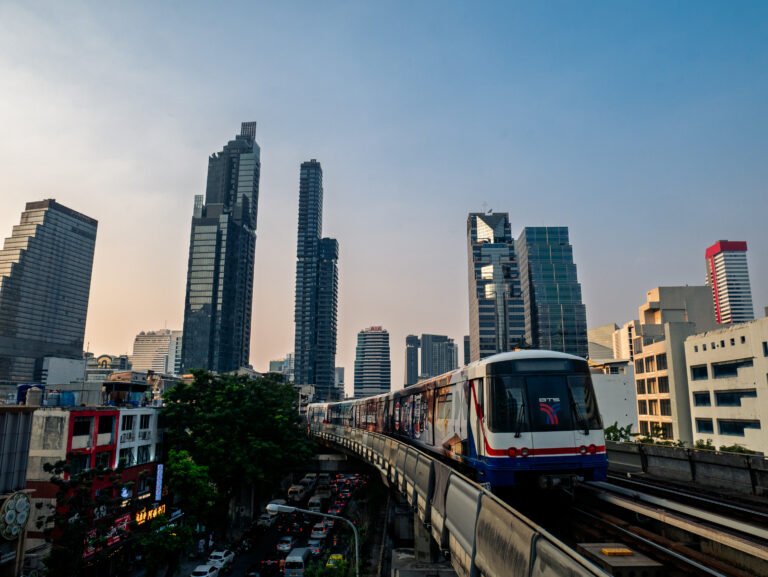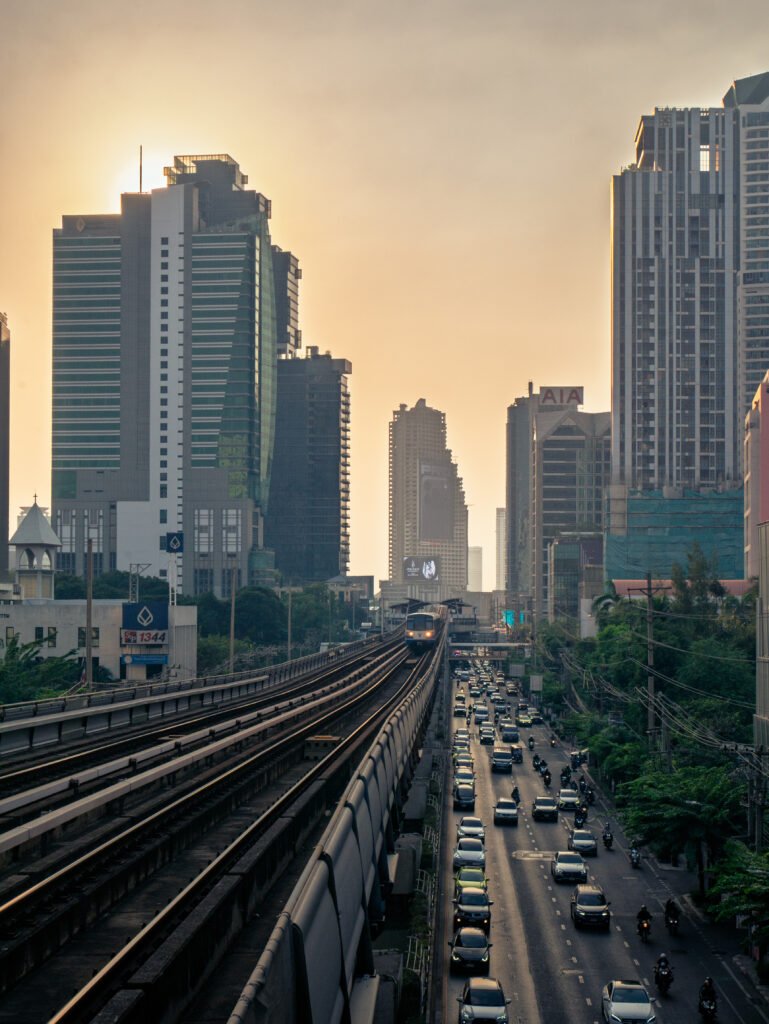
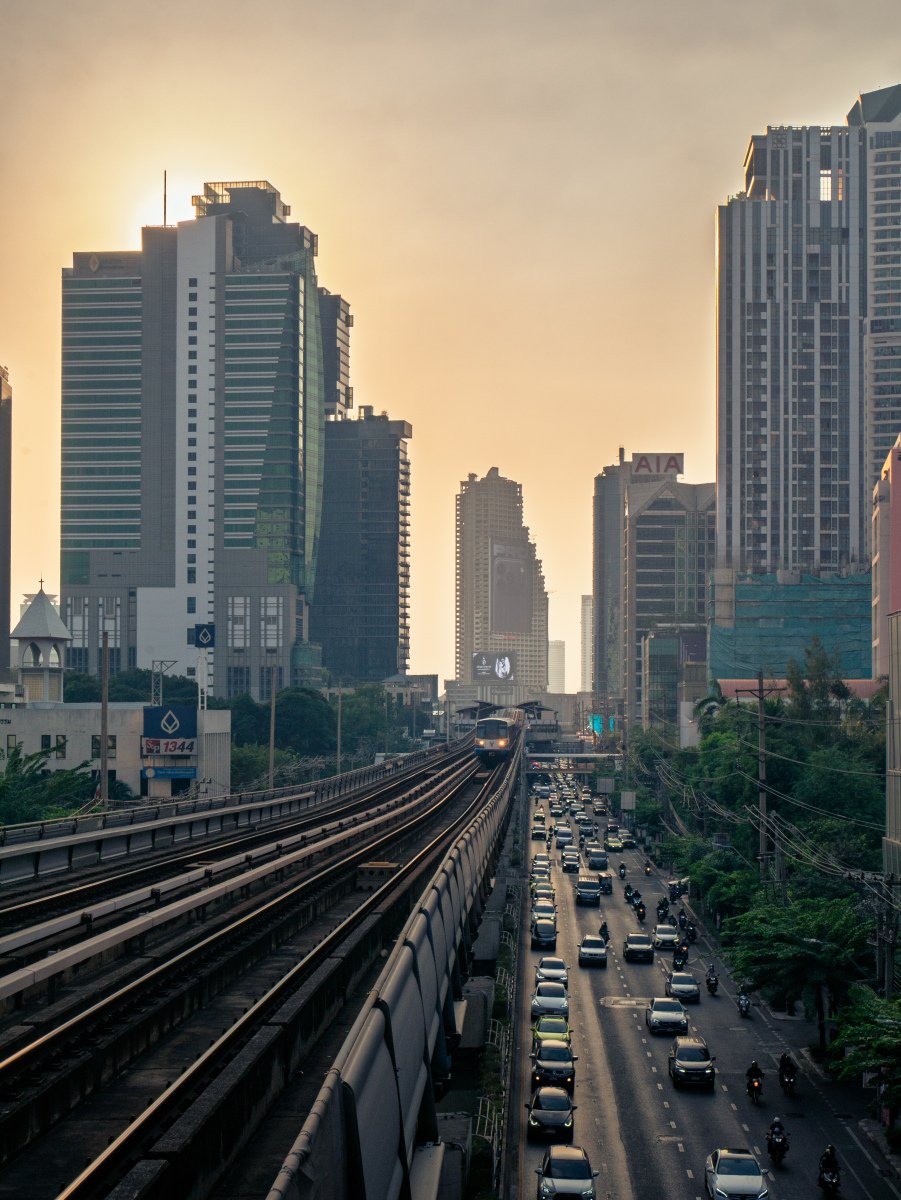
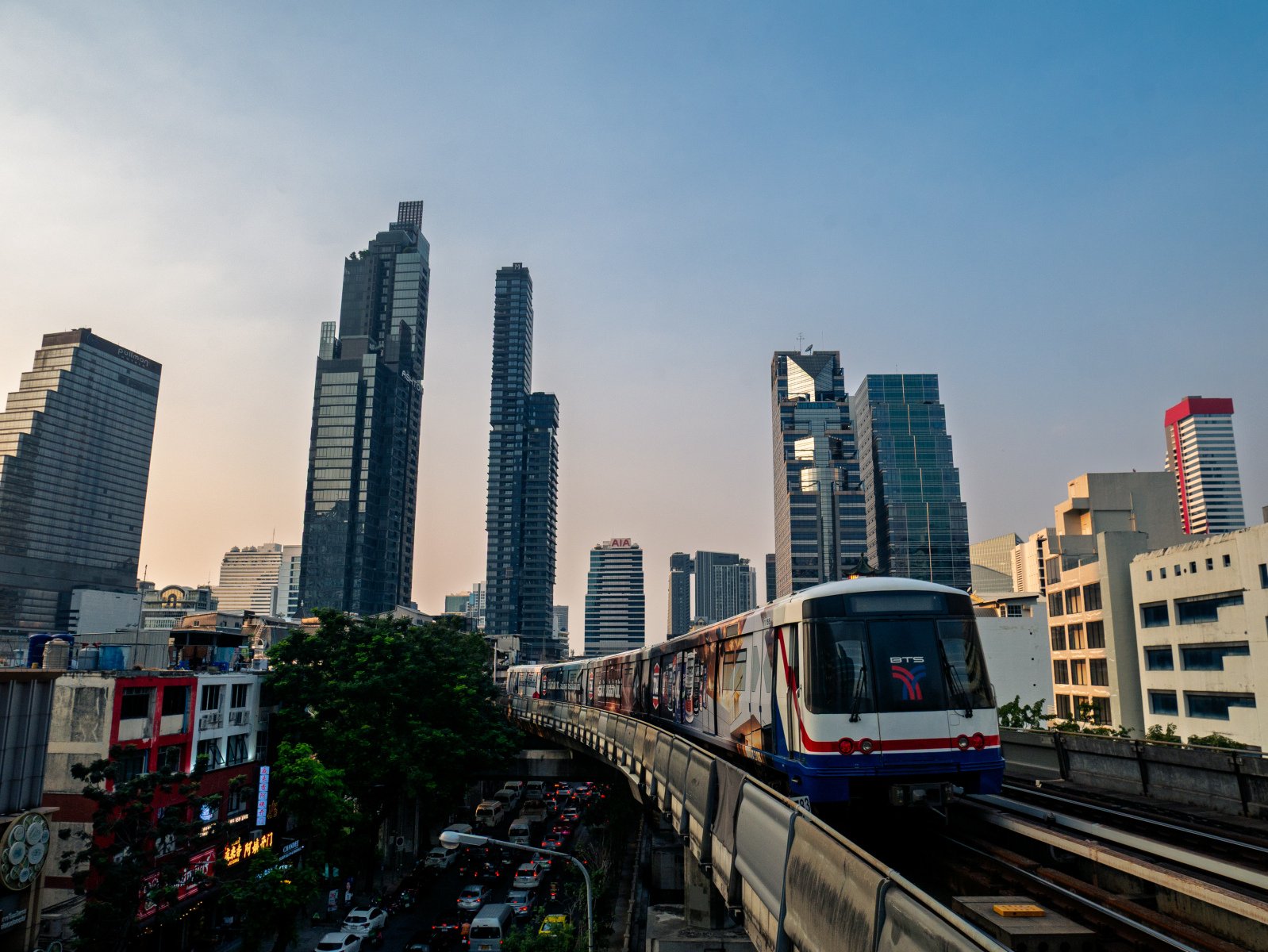
Most of these images were made along the same route, following the elevated tracks that cut through one part of the city. I returned there several times over a few days, usually around the same hour, when Bangkok felt at its fastest.
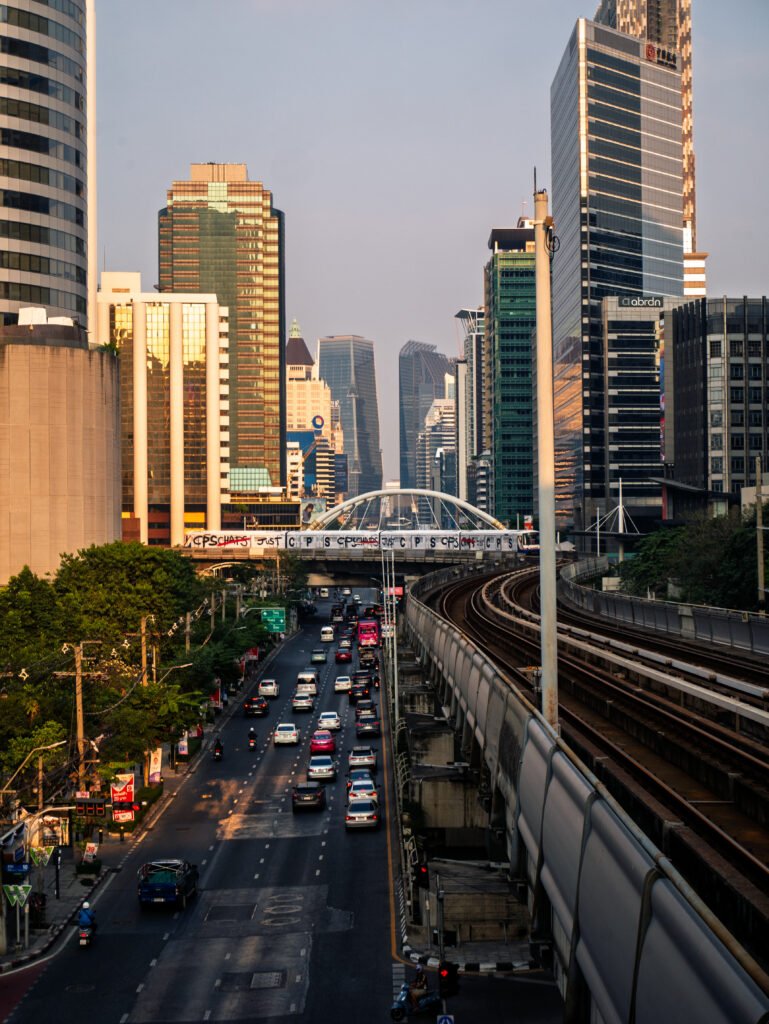
Moving through this area during rush hour changed how I experienced the city. Everything felt busy and compressed, but at the same time surprisingly structured — shaped by lines, stations, and the constant movement between them.
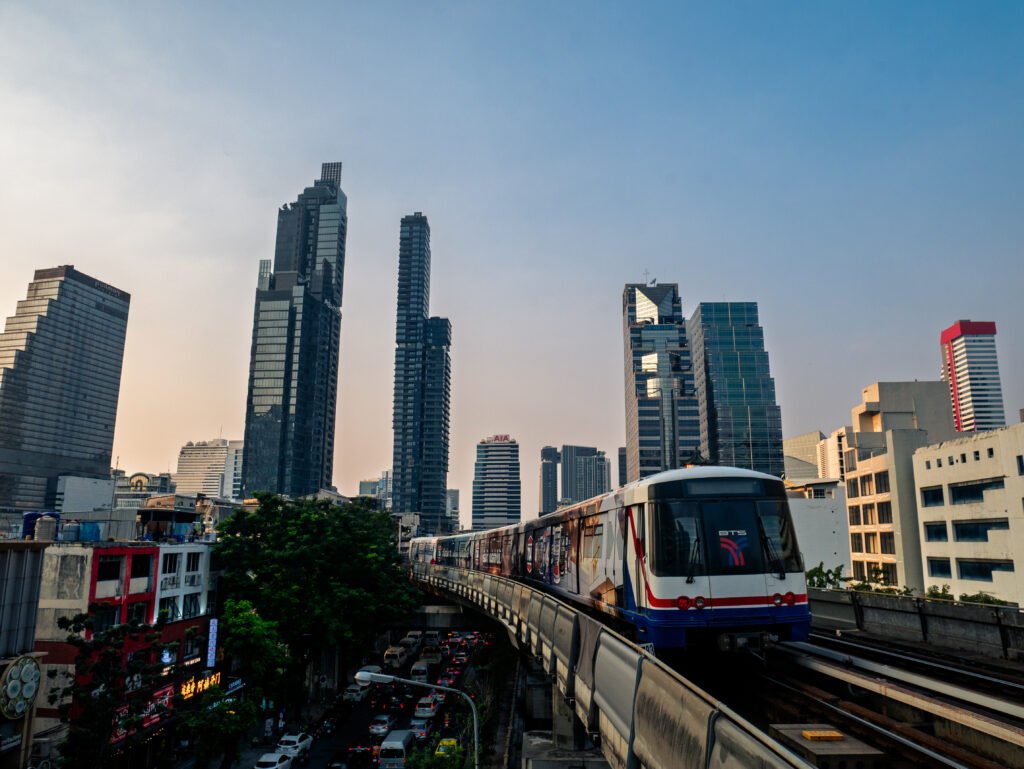
Walking there alone with a camera never really felt like staying in one place. It felt more like moving through a system that was already in motion.
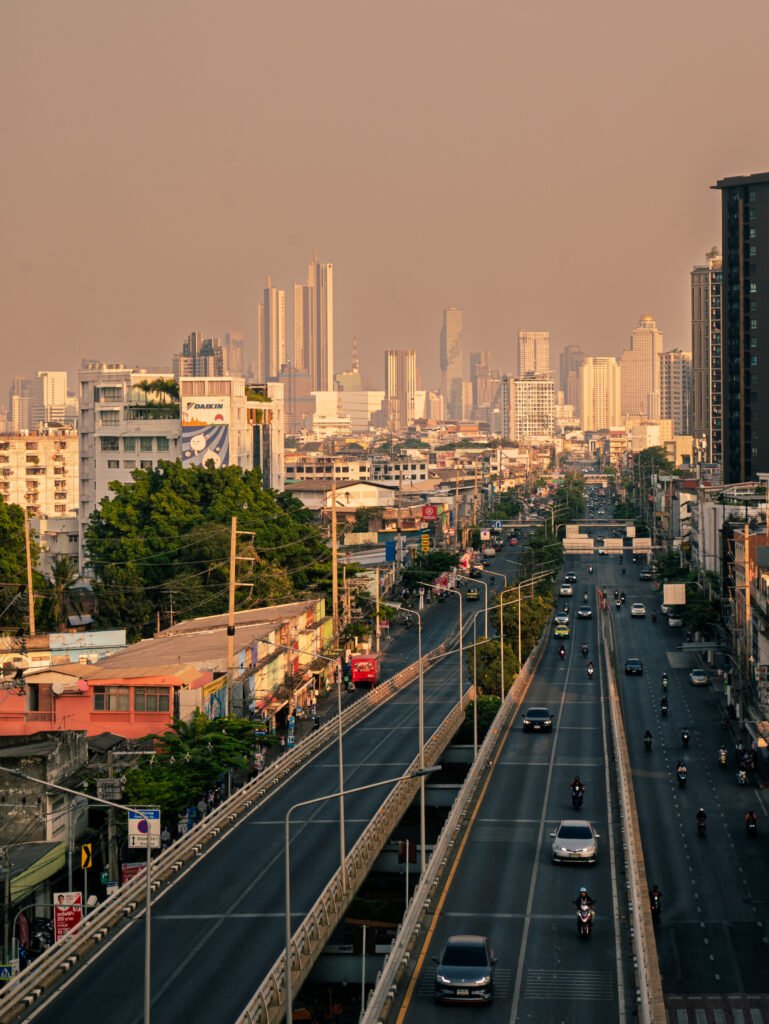
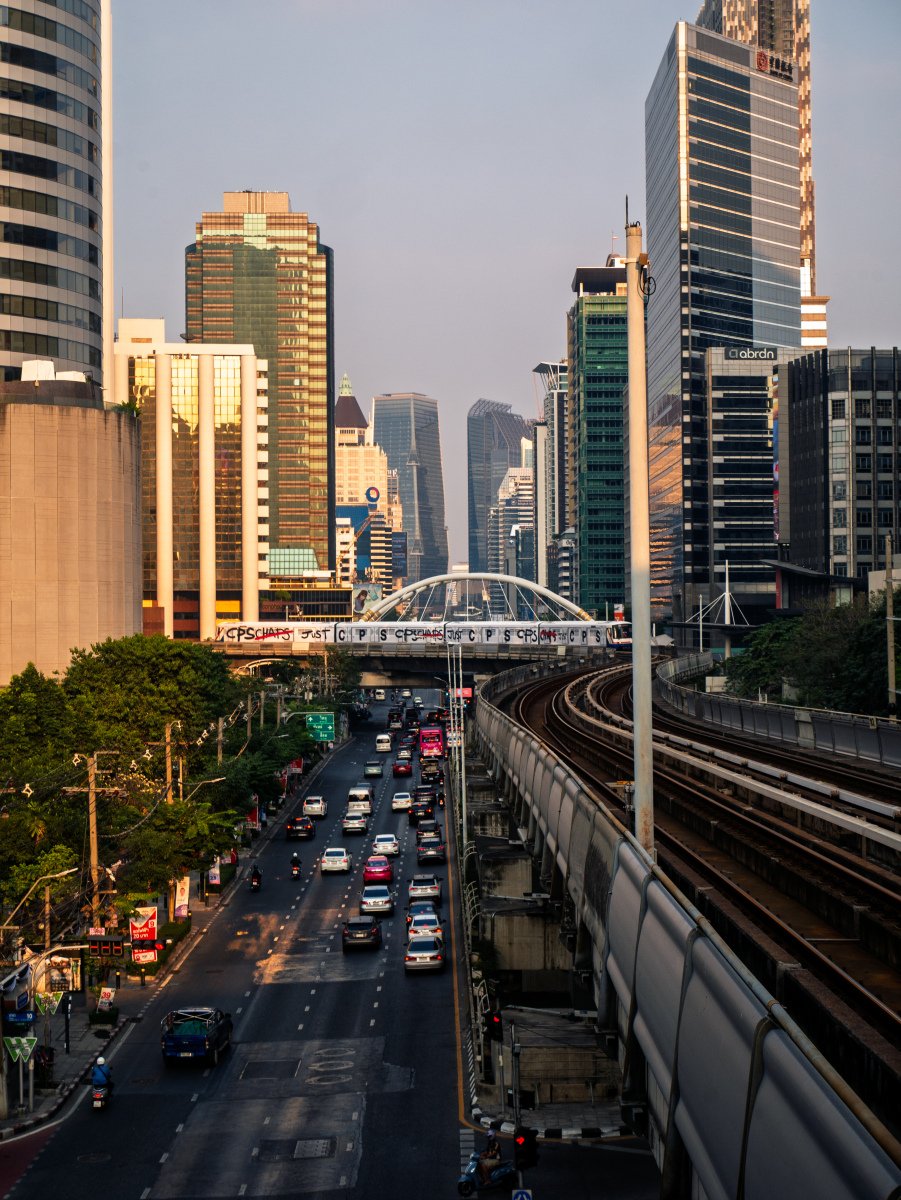
There was a certain tension in that movement. The streets were crowded, the air still heavy with heat, and everything seemed to move faster than expected. But at the same time the city felt organised in a very precise way — defined by tracks, crossings, and repeating structures that kept everything connected.
That contrast between speed and structure was what kept drawing me back.
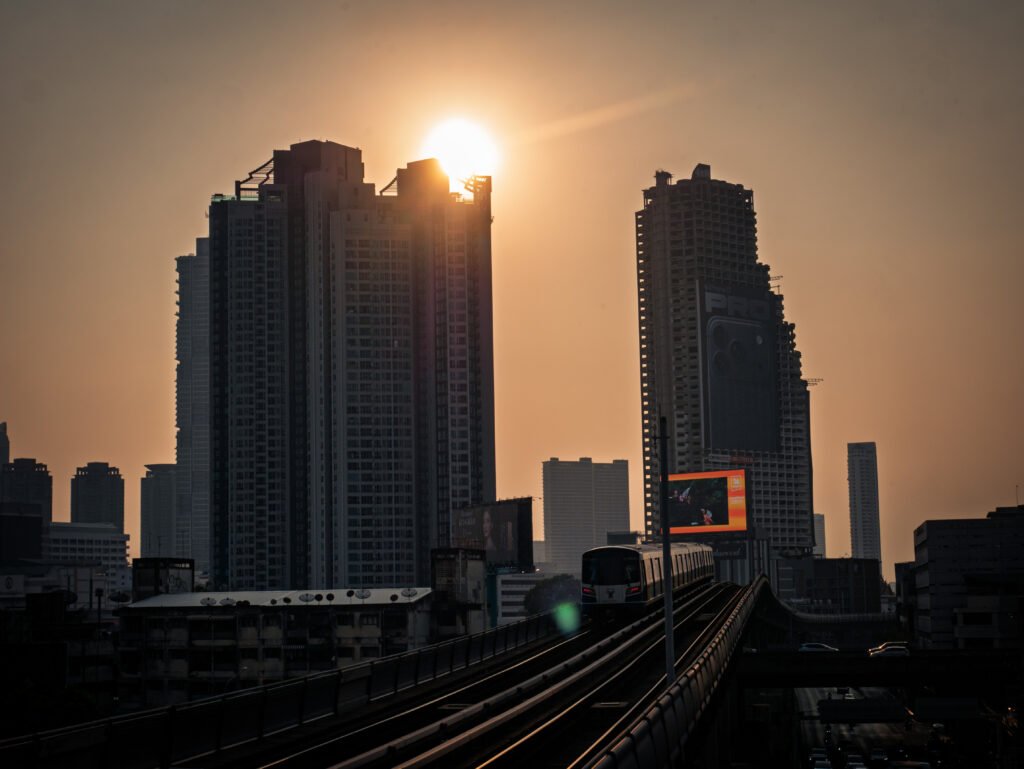
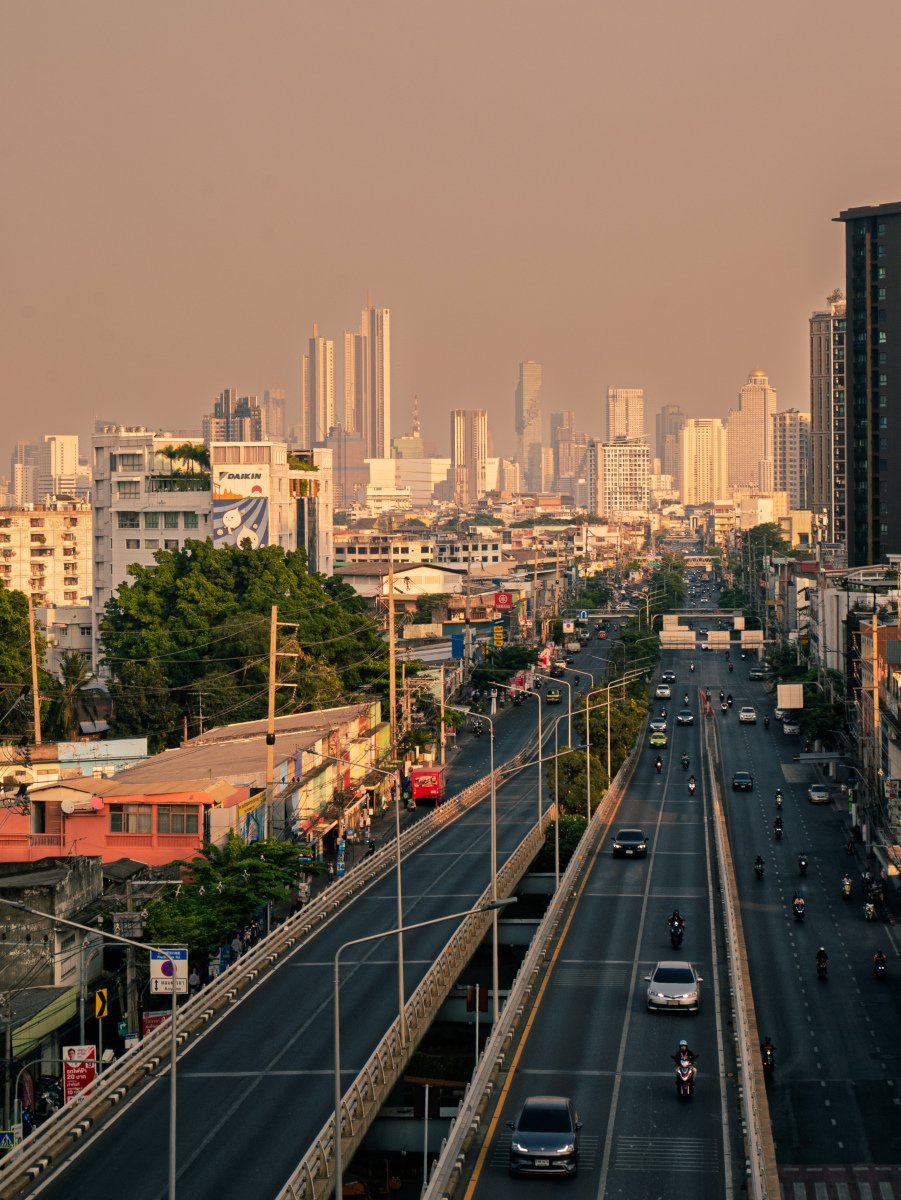
What kept drawing me back to this area were the layers. Streets running below, bridges crossing above them, and the train lines cutting through everything in between. Moving through these spaces made the city feel different — less like a collection of places and more like a connected structure unfolding in several directions at once.
That interaction between street level and the elevated tracks was what made this part of Bangkok especially interesting to photograph.
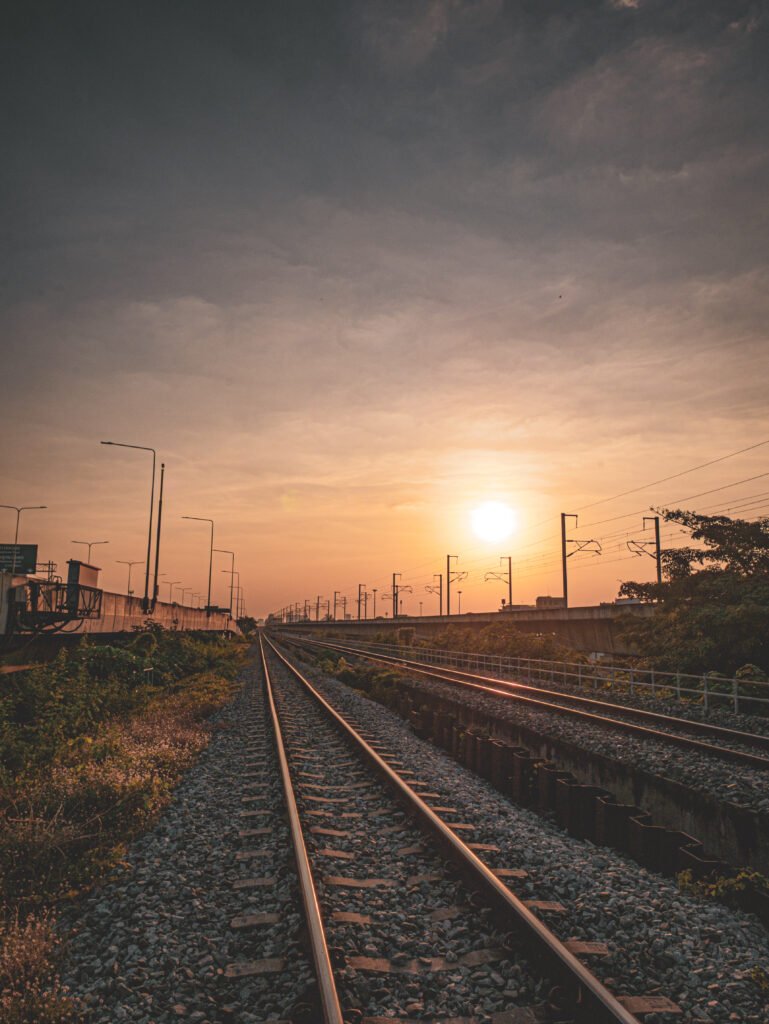
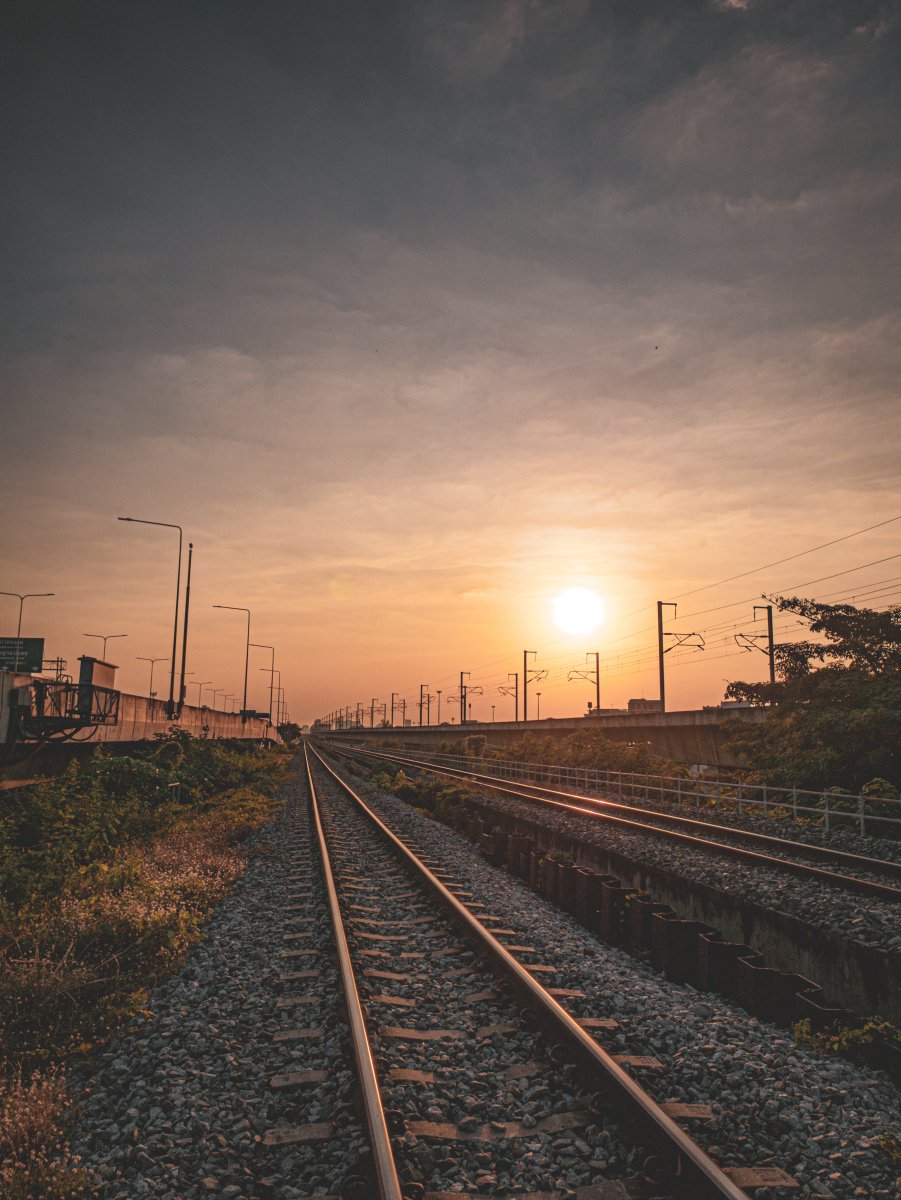
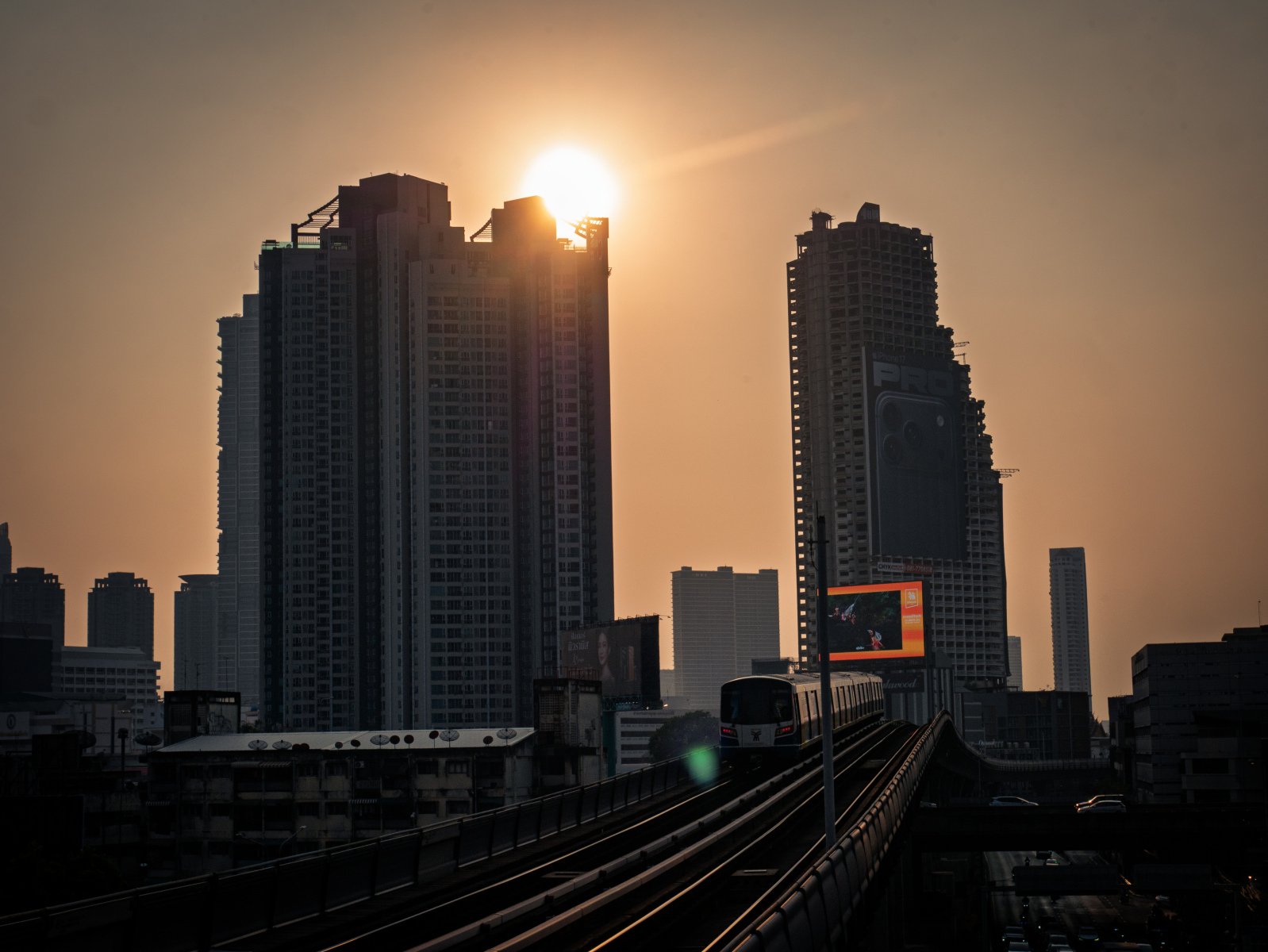
Later that evening I watched the sunset from a rooftop before heading back across the city. Getting there had been easy — following the elevated lines that structure movement through Bangkok almost automatically.
The way back felt different. Without the train, the city changed again. Moving at street level took longer and felt less predictable, and it made me realise how much those elevated routes shape the way the city can be experienced.
Somewhere between those layers — between the tracks above and the streets below — Bangkok started to feel like a system that reveals itself differently depending on how you move through it.
Grid
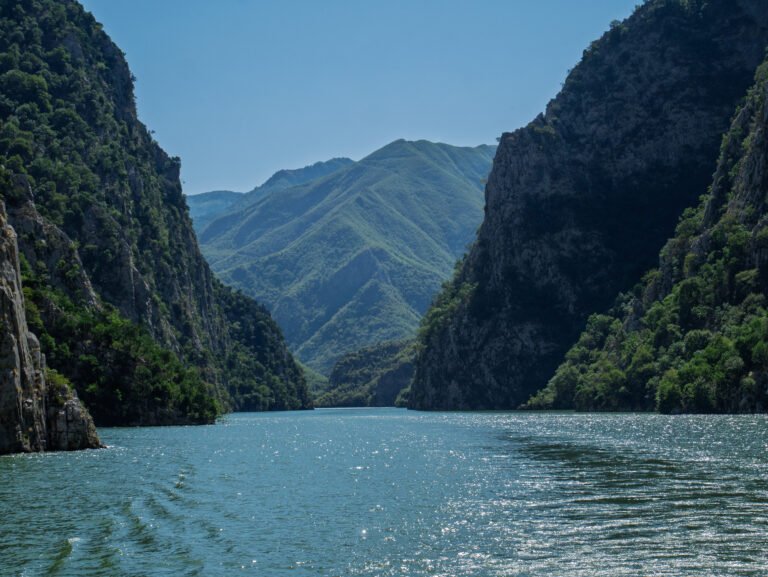
Valbona- Into the Albanian Alps
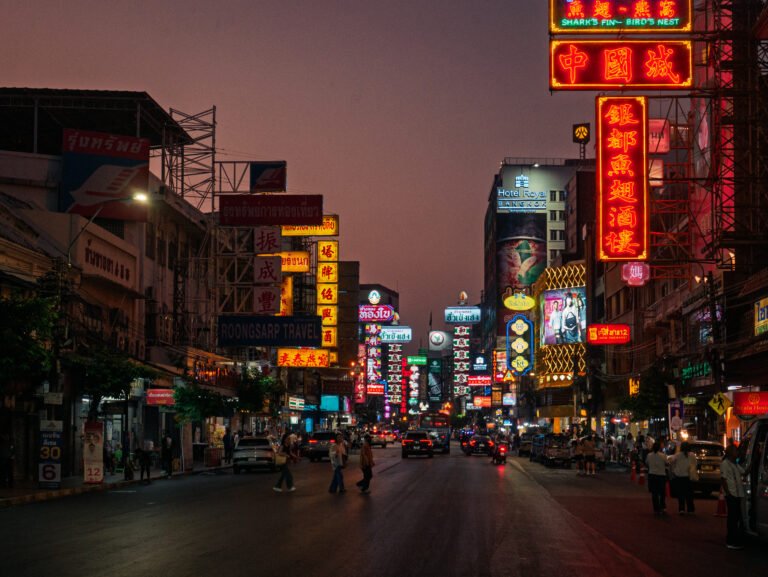
Between Neon and Silence